Standing before God in purity
Prayer requires ritual purity, and ablution is how it is achieved. The Quran says, in meaning: “O you who believe, when you rise for prayer, wash your faces and your arms up to the elbows, wipe your heads and (wash) your feet up to the ankles.” (Surah 5, verse 6)
This account follows the Hanafi school as taught by Diyanet. Our imam will gladly show you how to perform ablution in person.
The four obligatory parts
In the Hanafi school, ablution has four obligatory parts (fard) – exactly those named in this verse:
- washing the face once
- washing the arms including the elbows once
- wiping at least a quarter of the head with a wet hand (masah)
- washing the feet including the ankles once
Everything else, such as washing three times and keeping the order, is sunnah: practised and recommended by the Prophet (peace be upon him).
Step by step
- Make the intention and say “Bismillāhir-raḥmānir-raḥīm”.
- Wash your hands up to the wrists three times.
- Rinse your mouth three times, using your right hand.
- Draw water into your nose three times with your right hand and blow it out with your left.
- Wash your face three times – from the hairline to below the chin and from ear to ear.
- Wash your right arm including the elbow three times, then your left.
- Wipe over your head with your wet hands.
- Wipe your ears with your fingers (index fingers inside, thumbs behind) and wipe the back of your neck with the backs of your fingers.
- Wash your right foot including the ankle three times, also between the toes, then your left.
What breaks ablution
In the Hanafi school, ablution is broken by, among other things:
- using the toilet and passing wind
- sleeping lying down or leaning, and losing consciousness
- blood or pus flowing from the body
- vomiting a mouthful
Ablution is then repeated before the next prayer. In certain cases a full ablution (ghusl) is required instead – it will get its own article.
Everyday tips
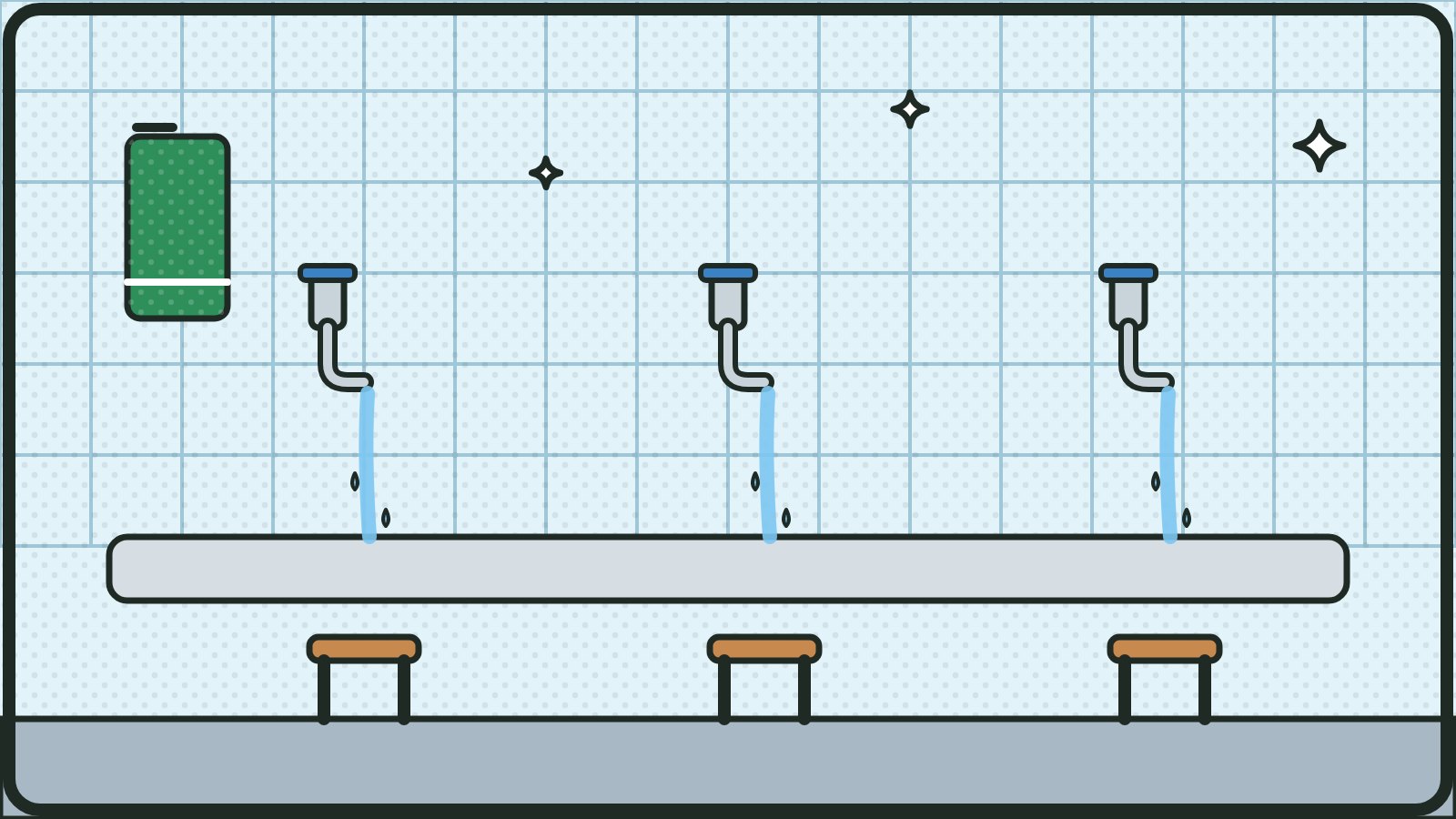
- Use water sparingly – nothing should be wasted, even during ablution.
- Carry a small towel.
- If you are unsure, just ask our imam or someone from the community – everyone is happy to help.
- Diyanet (Presidency of Religious Affairs): İlmihal I – İman ve İbadetler
- Quran, Surah 5 (al-Ma'ida), verse 6