
Welcome to the series
With this series you can learn step by step at home to read the Quran in Arabic – on your own, with your children or as a whole family. We start with the most important question: what is the Quran? In the next lesson we begin with the Arabic alphabet.
Reading is best learnt by listening and practising. Our imam will gladly help you find the right pronunciation.
God's word in the Arabic language
For Muslims the Quran (Arabic al-Qurʾān, Turkish Kur'an-ı Kerim) is the word of God. It was revealed to the Prophet Muhammad (peace be upon him) through the angel Gabriel (Jibril) in Arabic – gradually, over about 23 years (610 to 632 CE). The word “Qurʾān” means “that which is read” or “recited”.
The Prophet received the first revelation in the cave of Hira near Mecca in the month of Ramadan. It begins with the word “Read!”: “Iqraʾ bismi rabbika lladhī khalaq” – “Read in the name of your Lord who created.” (Surah 96, verse 1)
Surahs and verses
- 114 surahs (chapters)
- 6,236 verses (Arabic āya) according to the count commonly used today
- The first surah is al-Fātiḥa, “the Opening”, with 7 verses; it is recited in every unit of prayer.
- The longest surah is al-Baqara with 286 verses, the shortest al-Kawthar with 3 verses.
- The surahs are divided into Meccan (revealed before the emigration to Medina) and Medinan; usually 86 Meccan and 28 Medinan surahs are counted.
- For regular reading the Quran is divided into 30 parts of roughly equal length, called juzʾ (Turkish: cüz).
How the Quran became a book
Even during the Prophet's lifetime the Quran was memorised and written down. Under the first caliph, Abu Bakr, the written records were compiled into one volume; under the third caliph, ʿUthman, copies were made and sent to the major cities. All editions of the Quran today are based on this text.
Translations – in Turkish called “meal” – convey the meaning. The Quran in the true sense, however, is the Arabic text itself, which is why it is worth learning to read it.
Respect for the Quran
- In the Hanafi school, the Arabic Quran (mushaf) is only touched in a state of ablution (wudu).
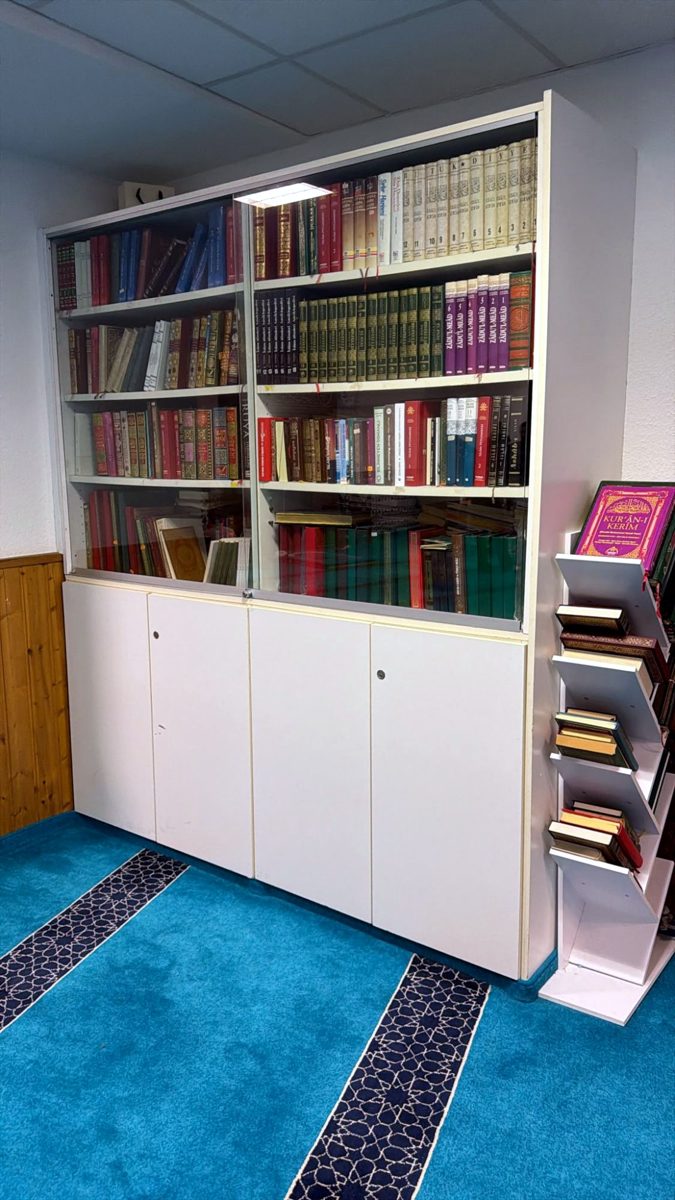
- It is kept in a clean, raised place, for example on a shelf or a reading stand (rahle).
- Before reading, one says “Aʿūdhu billāhi mina sh-shayṭāni r-rajīm” and “Bismillāhir-raḥmānir-raḥīm”.
The Quran says, in meaning: “And We have certainly made the Quran easy to remember. So is there anyone who will take heed?” (Surah 54, verse 17) – a lovely encouragement for everyone starting out. In Lesson 2 you will get to know the Arabic alphabet.
- Diyanet (Presidency of Religious Affairs): İlmihal I – İman ve İbadetler
- Quran: Surah 96:1; 2:185; 16:98; 54:17