
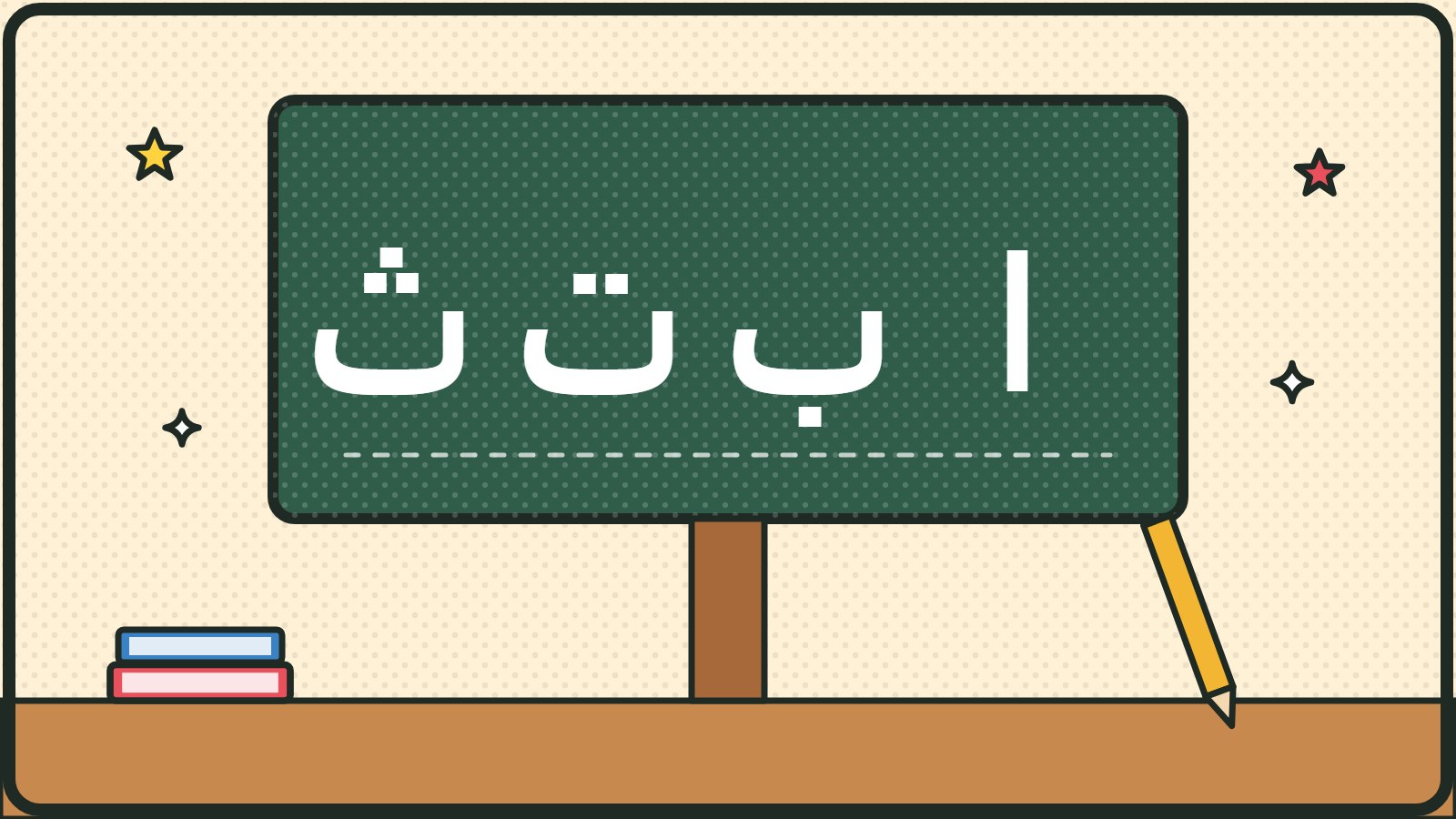
From right to left
The Quran is written in Arabic script. It has 28 letters and is read from right to left. In Turkish, the beginners' reading book is called “Elif-Ba” after its first two letters. Once you know the letters, you will soon be able to read your first words.
The 28 letters
Here are all the letters in their basic form – with their Arabic name and, in brackets, the Turkish name used in the Elif-Ba:
اAlif (Elif)
بBāʾ (Be)
تTāʾ (Te)
ثThāʾ (Se)
جJīm (Cim)
حḤāʾ (Ha)
خKhāʾ (Hı)
دDāl (Dal)
ذDhāl (Zel)
رRāʾ (Ra)
زZāy (Ze)
سSīn (Sin)
شShīn (Şın)
صṢād (Sad)
ضḌād (Dad)
طṬāʾ (Tı)
ظẒāʾ (Zı)
عʿAyn (Ayn)
غGhayn (Ğayn)
فFāʾ (Fe)
قQāf (Kaf)
كKāf (Kef)
لLām (Lam)
مMīm (Mim)
نNūn (Nun)
وWāw (Vav)
هHāʾ (He)
يYāʾ (Ye)
In the Turkish Elif-Ba tradition the combination “Lam-Alif” (لا) is also learnt as a separate character.
Good to know
- Dots make the difference: ب (Ba), ت (Ta) and ث (Tha) have the same basic shape – only the number and position of the dots tell them apart.
- Most letters are joined within a word and change their shape slightly in the process (at the beginning, in the middle, at the end).
- Six letters are never joined to the following letter: ا د ذ ر ز و.
- Some sounds do not exist in English, for example ع (ʿAyn), ح (Ḥa) or ق (Qaf). They are best learnt by listening and repeating.
How to practise at home
- Ten minutes every day is better than one hour once a week.
- Learn four or five letters first, say them out loud and write them – from right to left.
- Practise together with your children: who can spot the right letter first?
- Ask our imam or someone from the community to say the letters for you so you hear the right pronunciation.
In Lesson 3 you will learn the vowel signs (harakat) – with them you can read your first syllables.