
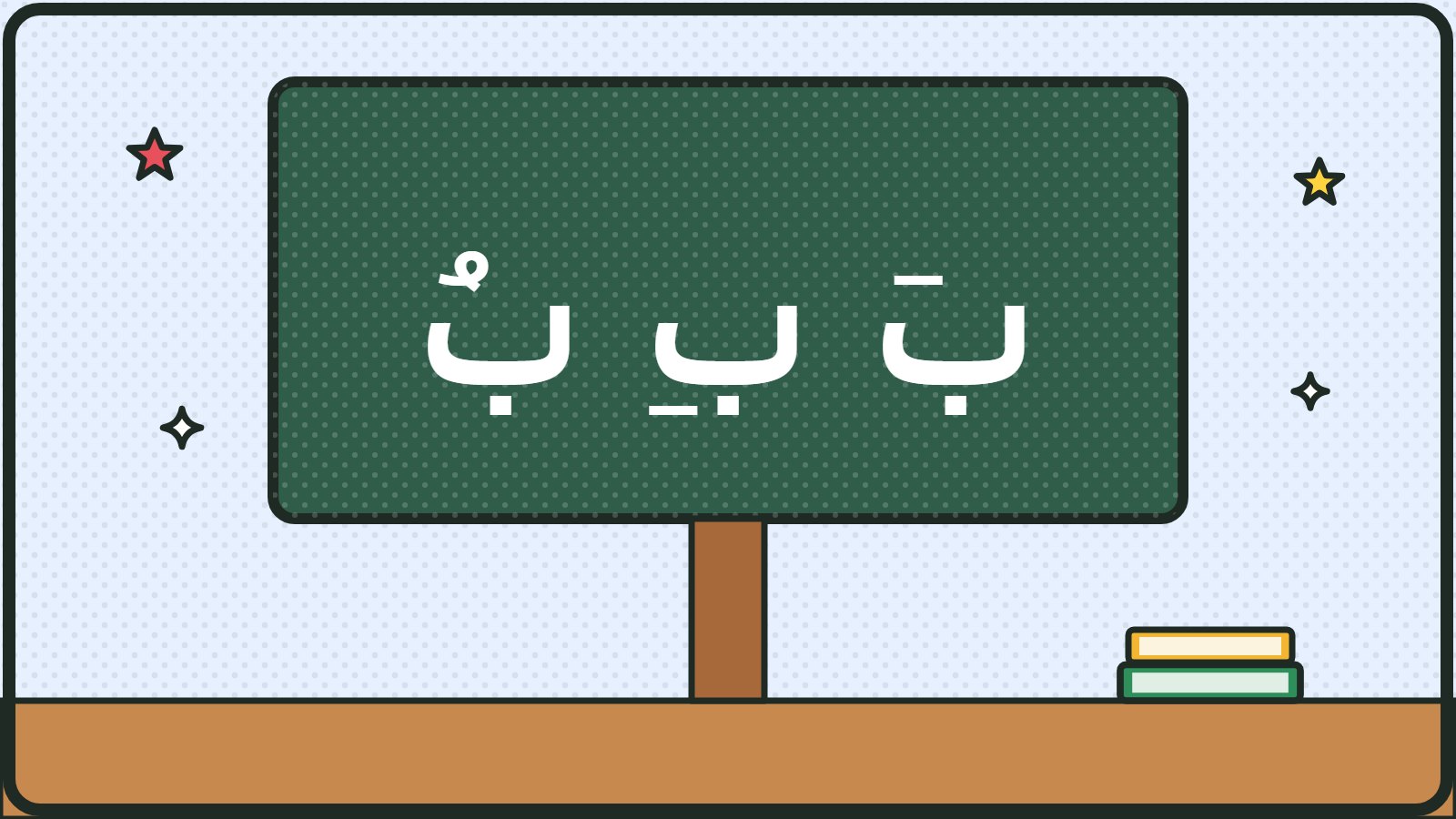
Short vowels above and below the letters
In Arabic script, short vowels are not written as separate letters but as small marks above or below a letter – called “ḥaraka” (Turkish: hareke, “movement”). In the Quran they are written everywhere so that every word is read correctly. With the three vowel signs you can already start reading your first syllables.
The three vowel signs
- Fatḥa (Turkish: üstün) ـَ : a small slanting stroke above the letter – read “a”, in the Turkish Elif-Ba “e” with light letters
- Kasra (esre) ـِ : a small slanting stroke below the letter – read “i”
- Ḍamma (ötre) ـُ : a small mark like a tiny و above the letter – read “u”, in the Turkish Elif-Ba “ü” with light letters
Light and heavy letters
In the Turkish Elif-Ba the sound depends on the letter: with “light” (ince) letters such as ب or ت you read e – i – ü, with “heavy” (kalın) letters such as ص, ض, ط, ظ, ق, خ and غ you read a – ı – u. In Arabic, too, the vowels sound darker with these heavy letters. The best way to hear the difference is from our imam.
Practice: reading syllables
Read each syllable out loud. In brackets is the reading in the Turkish Elif-Ba:
Your first words
If every letter of a word carries a vowel sign, you can read it syllable by syllable – from right to left:
Practise for a few minutes every day. In Lesson 4 you will learn how letters are joined within a word.