
Letters hold hands
In an Arabic word the letters do not stand apart; they are joined to each other – like joined-up handwriting. In the process their shape changes slightly, depending on whether a letter stands alone or at the beginning, in the middle or at the end of a word. You already know the basic form from Lesson 2.
Four forms
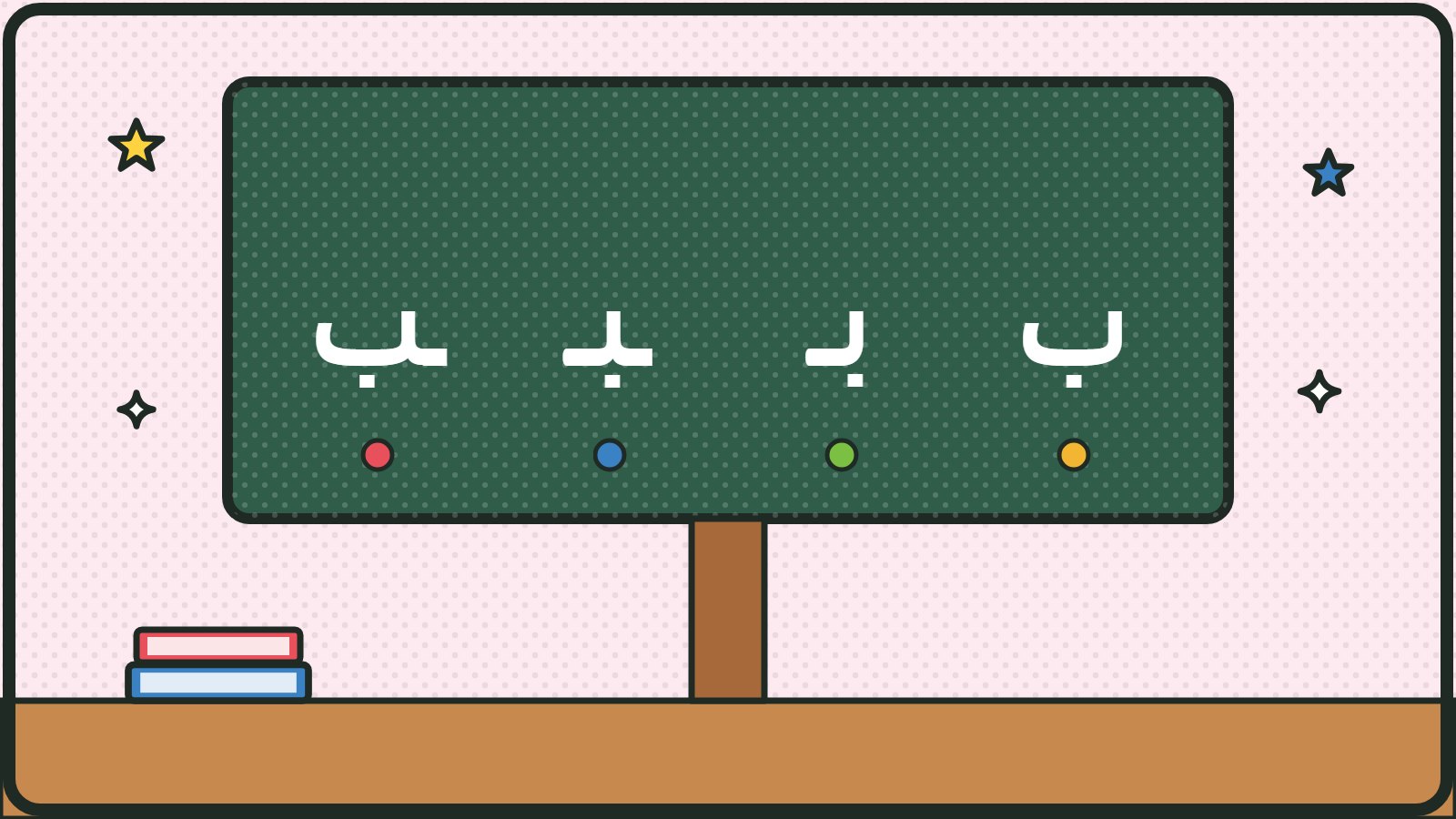
Here are some letters in their four forms – from right to left: alone, at the beginning, in the middle, at the end:
Many letters look almost the same at the beginning and in the middle and differ only by their dots: بـ تـ ثـ نـ يـ. ه and ع change a lot – take a close look at them.
Six letters that do not join forwards
Six letters only join the letter before them, never the one after. That is why they have only two forms – from the right: alone and at the end:
When one of these letters appears in a word, there is a small gap after it and the next letter starts again – in its initial form.
Lam-Alif: a special pair
When an Alif (ا) follows a Lam (ل), the two join into a special character: لا. That is why the Turkish Elif-Ba teaches it like a separate letter.
Practice: reading words
Read the words syllable by syllable and notice which form each letter takes. In brackets is the reading in the Turkish Elif-Ba:
In زَرَعَ you can clearly see that ز and ر do not join forwards. In Lesson 5 you will learn the sukun – the sign for syllables without a vowel.